
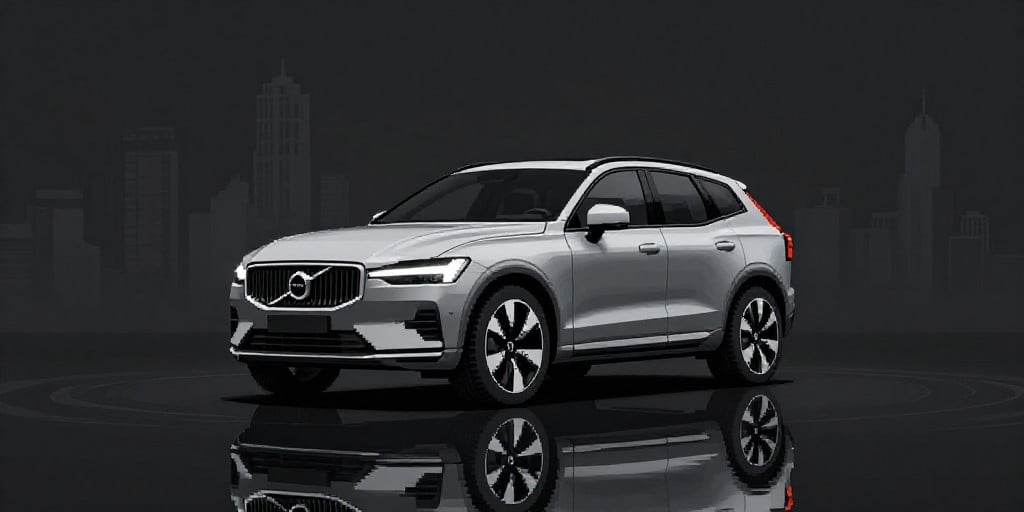
Volvo AB’s Strategic Pivot: From Diesel Disputes to AI‑Enabled Electric SUVs
Volvo AB, the Swedish industrial heavyweight that has long dominated the global truck, bus, and construction‑equipment markets, is accelerating a bold transformation. The company’s share price, hovering at 309.6 SEK, reflects a market‑cap of 638 billion SEK and a price‑earnings ratio of 19.38—figures that belie a firm grappling with regulatory challenges and fierce competition in the burgeoning electric‑vehicle (EV) arena.
1. 2027 Volvo EX60: A Game‑Changer on the Road
The first‑drive report of the 2027 Volvo EX60, unveiled on 20 May, heralds a significant shift toward mass‑market EVs. With an expected price of around US $60,000, the EX60 is positioned to outpace the current XC60 lineup. Critics have noted that the EX60 offers more than a mere successor; it boasts superior powertrain efficiency, a larger battery capacity, and a refined chassis that rivals the performance of BMW’s and Mercedes’ contemporary SUVs. Early test drives in Sweden and Denmark confirm the vehicle’s “ultra‑smooth” handling and competitive acceleration, positioning Volvo as a credible challenger in the premium EV segment.
2. AI‑Driven Driver Assistance via Google Gemini
In a strategic partnership with Google, Volvo is integrating Gemini, Google’s conversational AI, into the EX60’s sensor suite. Gemini will interpret camera feeds to recognize parking signs, a capability demonstrated on 19 May when the company tested the system’s ability to read “NO PARKING” signs. The AI will also provide contextual driver assistance, interpreting surrounding traffic conditions in real time. This move addresses a key consumer pain point: the growing need for autonomous features that can seamlessly interact with complex urban environments.
3. Expanding U.S. Presence: A New EV for the American Market
Volvo’s decision to launch the EX60 in the United States, replacing the $35,000 EX30, signals a clear intent to capture a larger share of the highly competitive North American EV market. The pricing strategy—starting at US $58,400—places the EX60 in direct competition with Rivian’s R2 and other luxury EVs. By offering a Scandinavian blend of safety, durability, and advanced technology, Volvo aims to carve out a niche among American consumers who value reliability as much as performance.
4. Regulatory Compliance and Financial Implications
Volvo’s North American unit recently settled a California Air Resources Board dispute over emissions compliance for 2010‑2016 diesel engines. The $197 million settlement—comprised of civil penalties, environmental fund contributions, and project costs—highlights the financial risk of legacy diesel operations. The company’s internal review found no evidence of bad‑faith conduct, yet the settlement underscores the urgency of transitioning to zero‑emission powertrains.
The settlement also illustrates how regulatory pressure can shape corporate strategy. Volvo has now committed substantial resources to environmental projects in California, signaling a shift toward more stringent emissions standards across its product line.
5. Market Perception and Analyst Sentiment
Recent analyst updates provide a mixed outlook. SB1 Markets has adopted a neutral recommendation with a 25 SEK target price, citing the company’s robust market position but also the high capital outlays required for EV development. The share’s recent 52‑week low of 245.2 SEK and high of 353.6 SEK reflect volatility, yet the current close price indicates a resilient investor base willing to support Volvo’s transformation.
6. Competitive Landscape and Future Outlook
The truck‑manufacturing sector remains fiercely competitive, with Volvo Trucks participating in the “Truck‑Grand‑Prix” to showcase electric and combustion‑engine performance. While the company continues to deliver high‑powered vehicles, it faces pressure from emerging EV-only manufacturers that are reshaping market expectations. Volvo’s strategy of leveraging AI, advanced battery technology, and a broad geographic footprint is a calculated attempt to maintain relevance and profitability.
Conclusion
Volvo AB is at a crossroads. The company’s pivot toward AI‑enhanced EVs, exemplified by the EX60, is a decisive response to both regulatory scrutiny and market demand for sustainable mobility solutions. The settlement with California’s air board and the aggressive U.S. pricing strategy underscore a commitment to rapid transformation. Whether Volvo can translate its legacy strength in heavy‑equipment manufacturing into a dominant position in the electric automotive sector remains to be seen. What is certain, however, is that the company’s next decade will be defined by its ability to merge Scandinavian engineering rigor with cutting‑edge technology in a rapidly evolving industry.