Volvo’s Strategic Pivot Amid Global Headwinds
Volvo’s recent disclosures paint a stark portrait of a company forced to confront a confluence of geopolitical turbulence, shifting consumer sentiment, and the imperative for sustainable innovation. The Swedish conglomerate’s quarterly figures reveal a 11 % plunge in vehicle sales in the United States—a casualty of the escalating Iran conflict and the resultant spike in fuel costs. Meanwhile, the group is accelerating its hydrogen‑powered truck program and expanding its footprint in Europe through strategic alliances and brand repositioning.
A Shock to the North American Market
According to Reuters and the Financial Post, Volvo Cars reported only 153,316 units sold in the first quarter of 2026, an 11 % drop from the same period last year. The company attributed the decline to the “Iran war” worsening market conditions and higher fuel prices eroding consumer spending power. This downturn is not isolated; the broader industrial sector is feeling the tremors of a global energy shift that undermines traditional combustion‑engine demand.
“Volvo Cars reports sales for the first quarter of 2026.” (news.cision.com)“Volvo Cars Q1 sales volumes fall 11% as Iran war worsens slide.” (www.reuters.com )
The 52‑week high for Volvo’s share price of 353.6 SEK and the 52‑week low of 221.2 SEK underscore the volatility that investors are grappling with. The current price of 314.8 SEK, paired with a price‑earnings ratio of 18.617, signals a market that is still hopeful yet wary.
Hydrogen: The New Frontier for Trucks
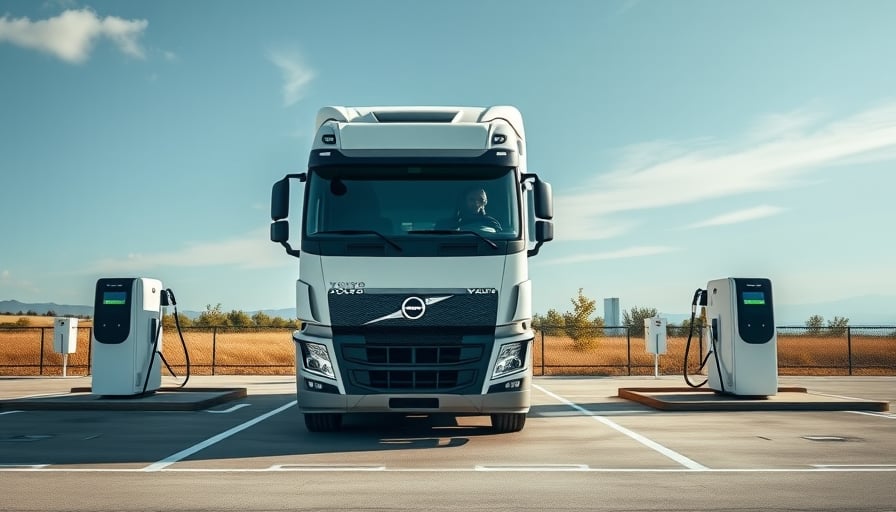
Volvo Group is not idling. In a series of announcements across Ansa, Finanznachrichten, and Elektoriknet, the company unveiled on‑road testing of heavy trucks powered by hydrogen combustion engines. The initiative, which leverages Westport Fuel Systems’ HPDI technology, aims for commercial deployment before 2030. By positioning itself at the vanguard of low‑emission heavy haulage, Volvo seeks to capture a nascent market segment that is likely to outpace legacy diesel operations.
“Volvo has begun on‑road testing of heavy trucks powered by hydrogen combustion engines.” (www.elektroniknet.de )“Volvo Trucks: Powerful and fuel‑efficient – meet Volvo’s future hydrogen truck.” (www.finanznachrichten.de )
This technological leap is not merely a green marketing ploy; it reflects a strategic shift toward future‑proofing the company’s core revenue streams.
Expanding Horizons: Lynk & Co and Geely Alliances
Volvo’s European expansion is being catalyzed through its exclusive importation of Lynk & Co, as reported by Elektroniknet and Evertiq. The partnership underscores a broader strategy to penetrate the burgeoning electric‑vehicle (EV) market, especially in price‑sensitive segments. Additionally, a collaboration with Geely—highlighted by the Manila Times—signals Volvo’s readiness to leverage joint ventures for accelerated market penetration.
“Wachstumsambitionen in Europa: Volvo wird exklusiver Importeur von Lynk & Co.” (www.elektroniknet.de )“Volvo leans on Geely.” (www.manilatimes.net )
These alliances illustrate Volvo’s acknowledgment that organic growth in a saturated market is insufficient; partnership is essential.
The EX30 Refresh: A Tactical Pricing Move
Volvo’s latest EX30 model, now available in a new base version at 34 990 Euro, demonstrates the brand’s commitment to affordability in the electric SUV segment. The decision to introduce a lower‑priced variant is a direct response to intensifying competition from other European EV makers and a strategic maneuver to broaden its customer base.
“Neue Basisversion: Volvo EX30 startet jetzt bei 34.990 Euro.” (www.electrive.net )
The move is timely, coinciding with the company’s broader push to capture market share in Europe where EV adoption is accelerating rapidly.
The Bottom Line
Volvo’s current trajectory reflects a company at a crossroads: grappling with geopolitical shocks that erode traditional sales while simultaneously investing heavily in hydrogen technology and strategic partnerships to secure future growth. The 11 % sales decline is a glaring warning signal, yet Volvo’s proactive steps—hydrogen truck trials, exclusive Lynk & Co importation, and a refreshed EX30 lineup—suggest a resilient strategy aimed at weathering the current storm and emerging stronger. The market will be watching closely to see whether these bold moves translate into sustainable profitability and a reinforced market position.