
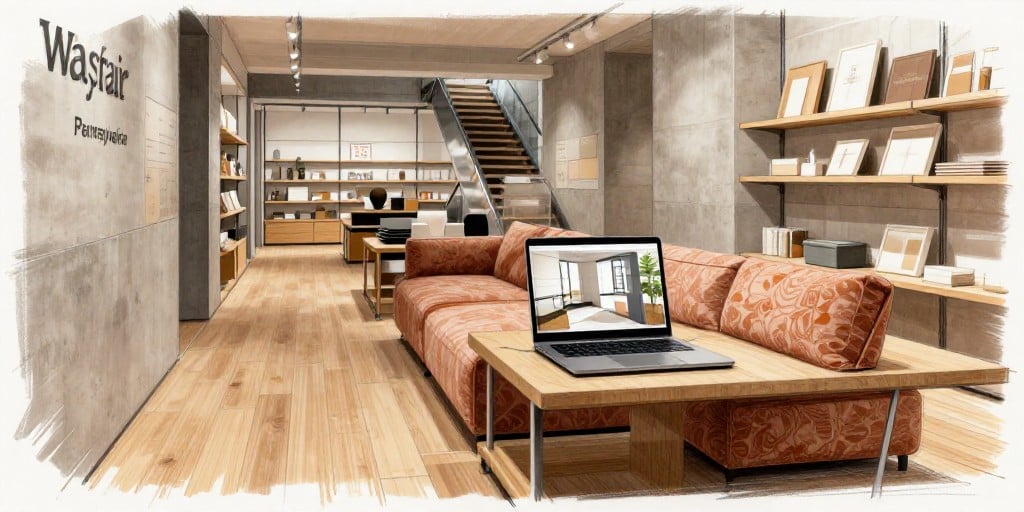
Wayfair’s Bold Physical‑Retail Gambit: Pittsburgh Store Opens New Chapter
Wayfair Inc. (NYSE: W), the internet‑catalog giant that has long dominated the home‑goods market from its Boston headquarters, is setting a new precedent for online retailers by opening a massive brick‑and‑mortar footprint in Pittsburgh, Pennsylvania. The 95,000‑square‑foot store, slated for 2027 at North Hills Village, signals a strategic shift that could reshape how the company competes with traditional retailers and disrupt the omnichannel retail landscape.
Why Pittsburgh?
The choice of Pittsburgh is no accident. The city is celebrated for its strong community roots and distinct architectural character—traits that resonate with Wayfair’s mission to enable customers to “seamlessly bring their home projects to life.” By placing its first Pennsylvania store in a regional shopping center just outside downtown, Wayfair leverages a high‑traffic location that blends convenience for shoppers with a showcase of its curated product lines.
Store Design and Service Offering
The new store will be a single‑level, all‑room‑category experience, featuring:
- Curated product selections organized by room and style, allowing shoppers to physically touch, feel, and visualize furniture and home‑accessories.
- An on‑site design studio where customers can collaborate with Wayfair’s design consultants on projects ranging from simple room updates to full‑home renovations.
- Same‑day take‑home options for many items, while larger purchases will be delivered as fast as two days through Wayfair’s logistics network.
These services represent a direct challenge to the purely online model, offering instant gratification and personalized expertise that the company’s competitors cannot replicate at scale.
Strategic Implications
Wayfair’s physical expansion reflects a broader industry trend: e‑commerce leaders are testing the viability of brick‑and‑mortar as a means to enhance customer experience and capture higher margins. The Pennsylvania store could:
- Bridge the gap between online convenience and in‑store tangibility, potentially increasing conversion rates for high‑price items that consumers are reluctant to purchase without physical inspection.
- Generate additional revenue streams through in‑store design consultations and immediate sales of curated assortments.
- Reinforce Wayfair’s brand as a holistic home‑retailing destination, moving beyond “one‑stop online shop” to a full‑service provider.
The move also places Wayfair at the forefront of retail innovation, positioning the company as a pioneer among its peers—an assertion that will be tested by the performance of this venture in the coming years.
Investor Perspective
Wayfair’s current market metrics present a paradox: a price‑to‑earnings ratio of -36.38 and a 52‑week low of $55.6 contrast sharply with its high of $119.98. Investors will scrutinize whether this physical expansion translates into sustainable earnings growth or merely diversifies risk. The company’s $11.2 billion market capitalization underscores the high expectations of Wall Street, while its stock price at $84.90 demonstrates volatility that may be mitigated—or exacerbated—by the success of the new store.
Conclusion
Wayfair’s Pittsburgh store is more than an expansion; it is a bold statement that the company is willing to bet on its own brand and customer experience. Should the venture succeed, it could redefine the competitive dynamics of the consumer‑discretionary sector and force other internet‑retailers to reconsider their own omnichannel strategies. Time will tell whether the gamble pays off, but the stakes—and the potential rewards—are unmistakably high.