XPeng Inc. Expands Global Footprint While Navigating Regulatory and Safety Challenges
XPeng Inc. (HK: 09868.HK, NYSE: XPEV) has intensified its global expansion and technological advancement in the current quarter, marked by a series of high‑profile product launches and regulatory approvals. Despite these strides, the company is confronting scrutiny over safety incidents involving its X9 model and shifting market sentiment among investors.
Product Launches and Export Strategy
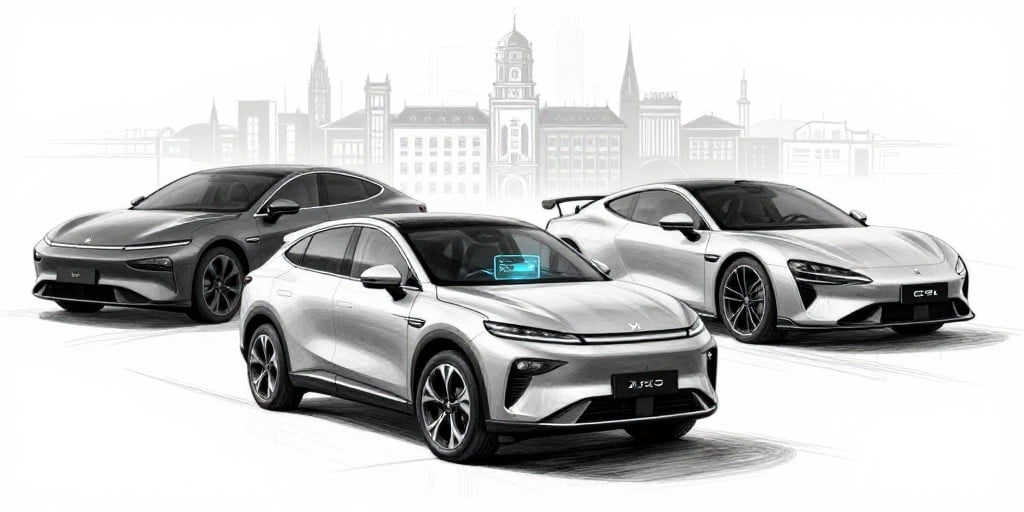
On 27 October 2026, XPeng announced that the Mona L05 SUV would commence export sales before its domestic launch in China. The move, reported by Elektroquatsch.de, positions the vehicle as a competitive entrant in international markets, particularly in regions where electric SUVs are experiencing rapid adoption. The L05’s advanced battery management and connectivity features are expected to resonate with consumers seeking high‑performance, low‑range‑ anxiety vehicles.
Concurrently, the GX and G9L models are slated for a launch in the Middle East next week, as disclosed by cnevpost.com. XPeng’s overseas sales network has surpassed 1,200 stores globally, underscoring its ambition to capture a sizable share of the growing EV market outside China.
Autonomous Driving Milestones
XPeng’s autonomous driving agenda has accelerated significantly. The company secured a Level 4 (L4) autonomous driving test permit for robotaxi operations in Guangzhou, China, a milestone reported by IT‑Times and Vision‑Mobility. The approval allows XPeng to conduct full‑scale autonomous taxi trials across the entire Guangzhou metropolitan area, a first for any Chinese EV manufacturer. Complementing this, News.Google.com highlighted that XPeng’s YOYO platform also received an L4 demo permit, broadening the firm’s autonomous testing footprint.
The robotaxi initiative aligns with XPeng’s broader strategy to diversify revenue streams beyond traditional vehicle sales. By leveraging its AI and sensor fusion capabilities, the company aims to capture the burgeoning urban mobility market and establish a foothold in the autonomous ride‑hailing sector.
Safety Incident and Airbag Activation Concerns
Despite its technological advancements, XPeng faced scrutiny following a collision incident involving an X9 SUV on 15 October 2026. The vehicle, traveling at 87 km/h, collided with a concrete mixer truck, then struck roadside infrastructure before overturning. Notably, no airbags deployed—including the front passenger and side curtain airbags—despite the severity of the impact. Reports from Aastocks.com and Elektroquatsch.de detailed that the vehicle was in manual mode during the crash, and the driver had repeatedly accelerated and turned sharply.
The incident triggered a safety investigation and heightened media attention. Although occupants sustained no physical injuries, the lack of airbag deployment raised questions about the effectiveness of XPeng’s collision‑avoidance systems and prompted calls for more rigorous testing and certification. The event has also contributed to a decline in investor confidence, as reflected in recent analyst downgrades.
Market Reaction and Analyst Sentiment
The combined effect of regulatory approvals and safety concerns has influenced XPeng’s market trajectory. Analysts at CLSA have reassessed the Chinese automotive sector as “neutral,” adjusting price targets for leading EV makers, including XPeng and NIO. JPMorgan and Nio have also received street‑low targets following the bank’s downgrade of the sector, indicating a broader market cautiousness toward high‑growth EV companies.
XPeng’s share price, which closed at HK$35.70 on 25 October 2026, remains below its 52‑week low of HK$15.82 but far below its 52‑week high of HK$110.80. The company’s price‑earnings ratio stands at –20.264, reflecting the valuation pressure typical of companies in a highly competitive and rapidly evolving industry.
Strategic Outlook
XPeng’s expansion into export markets and autonomous testing in Guangzhou demonstrates a clear focus on scaling its technological and geographic reach. However, the recent safety incident underscores the importance of robust safety protocols and transparent communication with regulators and consumers.
To sustain momentum, XPeng must balance aggressive market entry with stringent safety assurance, ensuring that its autonomous and electric vehicle platforms meet the highest standards. The company’s future performance will likely hinge on its ability to navigate these dual imperatives while capitalizing on the growing demand for smart, electric mobility solutions worldwide.