XPeng Inc. Accelerates Market Penetration Amid Intensifying Competition
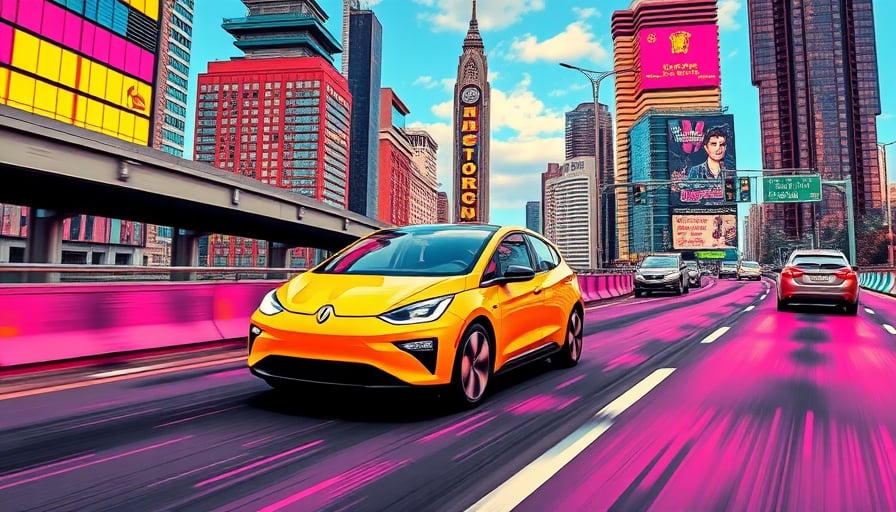
XPeng Inc., the Guangzhou‑based electric‑vehicle (EV) manufacturer, has announced a series of developments that underscore its aggressive push into global markets. The company’s latest model, the XPeng M03, debuted on April 3, 2026, with a starting price of 119,800 yuan, signalling a decisive entry into the sub‑luxury SUV segment. Coupled with the continued refinement of the flagship P7+, XPeng is positioning itself as a formidable challenger to incumbents such as Tesla, Nio, and Geely.
Product Evolution: From P7+ to M03
- P7+ – Recent reviews from Inside‑Digital and AutoGazette praised the P7+ for its “futuristic, sleek, and captivating” design and “efficient consumption” alongside “ultra‑fast charging.” These attributes align with XPeng’s strategic emphasis on high‑performance, user‑centric vehicles that integrate cutting‑edge autonomous technology.
- M03 – The new model, launched at 119,800 yuan, represents a calibrated step toward affordability without compromising on XPeng’s hallmark smart‑vehicle ecosystem. By offering a competitively priced SUV, XPeng targets the expanding mid‑tier segment that is increasingly sensitive to price, especially in emerging markets.
Market Context and Competitive Landscape
XPeng’s momentum coincides with a broader shift in the EV landscape:
- Regional Dynamics – In Southeast Asia, Malaysia is adopting a Completely Knocked Down (CKD) strategy, as reported by KLSescreener, to intensify local production and reduce reliance on imports. This policy could level the playing field for XPeng against local competitors, provided the company secures supply-chain partnerships.
- Global Sales Pressure – Kompas.com highlights that early‑2026 SUV sales data reveal a “fascinating” competitive race, where “several new models immediately dominate the market while some established names lag behind.” XPeng’s entry into the SUV segment could disrupt traditional powerhouses if the M03 resonates with consumers.
- European Penetration – According to Krone, a growing share of European new‑car sales originates from Chinese manufacturers, including XPeng. While European regulators emphasize safety and quality, XPeng’s recent product iterations suggest a concerted effort to meet stringent standards.
Financial Snapshot
- Stock Performance – As of April 1, 2026, XPeng closed at HKD 67.75 per share, a steep decline from its 52‑week high of HKD 110.8 (November 11, 2025) and just above its 52‑week low of HKD 17.55 (February 18, 2026). The company’s market capitalization stands at 129.46 billion HKD, reflecting a market that remains volatile amid macro‑economic pressures.
- Valuation Metrics – A price‑earnings ratio of –104.52 indicates that XPeng is operating at a loss, a common characteristic for fast‑growing EV firms. Nonetheless, the aggressive capital allocation toward R&D and production scale‑up may justify a high valuation multiple from an investor perspective.
Strategic Imperatives
- Product Diversification – The simultaneous promotion of the P7+ and launch of the M03 illustrates XPeng’s dual‑track approach: cater to high‑end buyers while capturing cost‑sensitive segments.
- Geographic Expansion – Embracing CKD production in Malaysia and targeting the European market through the Beijing Auto Show (as noted by Ansa.it) signal a deliberate effort to reduce tariff exposure and logistical costs.
- Technological Edge – XPeng’s focus on AI‑driven features, underscored by Morgan Stanley’s cautionary note on AI readiness, positions the company to capitalize on the next wave of autonomous driving solutions.
Conclusion
XPeng Inc. is rapidly scaling its product portfolio and geographic footprint amid a highly competitive EV ecosystem. While the firm’s current financial metrics reflect ongoing losses, its strategic initiatives—particularly the launch of the M03 and the P7+’s continued acclaim—indicate a concerted effort to secure a lasting market presence. Investors and analysts must weigh the company’s aggressive growth strategy against its valuation and the volatile macro‑environment that continues to shape the automotive industry.