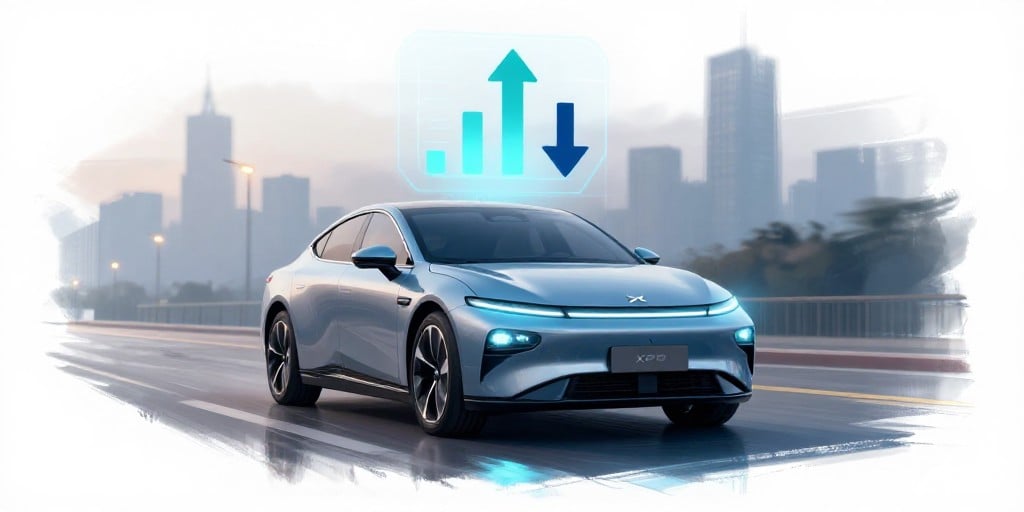
XPeng Inc. – A Paradox of Innovation and Instability
XPeng Inc., the Guangzhou‑based electric‑vehicle (EV) manufacturer, continues to oscillate between bold technological milestones and unsettling financial signals. With a market cap of 65.8 billion HKD and a negative price‑earnings ratio of –18.275, the company’s valuation reflects a paradox: investors are betting on a future that may never materialise, while the firm’s earnings trail far below market expectations.
Technological Headlines That Seem Too Good to Be True
The L03 PowerX with a 1,000‑km Range Extender Source: firmenauto.de The L03 PowerX promises a theoretical range of 1,000 km thanks to a sophisticated range extender. Yet, real‑world data from the L03 REEV test (elektroauto‑news.net) shows the gasoline engine never drives the wheels, suggesting the extension is merely a marketing hook rather than a practical solution.
Flying Car Milestones Sources: seekingalpha.com, globenewswire.com XPeng’s Aridge A868 has reportedly completed a full‑scale, full‑tiltrotor transition flight. While this showcases engineering audacity, no credible timeline exists for commercial deployment. The company’s “flying car” narrative risks alienating investors who prefer tangible road‑legal progress over speculative aerospace projects.
Paris Public Self‑Driving Rides Sources: carnewschina.com, eletric-vehicles.com XPeng is already offering self‑driving rides in Paris using its own NGP driver‑assist system. This early move into European markets is laudable, but it also signals a rushed attempt to capture growth abroad before consolidating domestic sales—particularly troubling given the sluggish domestic demand highlighted by HSBC.
New Models and Global Roll‑Outs Sources: cnevpost.com, elektroquatsch.de, cnevpost.com The company announced record deliveries of its Mona L05 (over 10,000 units) and positioned the lineup to reach 400,000 owners. Simultaneously, the G9L SUV launch in Thailand and Indonesia demonstrates aggressive global expansion. However, each new model risks cannibalising sales from existing offerings, straining already tight margins.
Performance and Efficiency Tests Sources: vision-mobility.de, autohaus.de The P7+ boasts 503 PS with low consumption and rapid charging, while the L03 delivers luxury and technology “for the money.” Yet, independent reviews point out that the L03’s performance may not justify its premium pricing, especially when the company’s profit margin shrinks due to rising component costs.
Financial and Market Sentiment – A Recipe for Volatility
HSBC’s Downgrade and Price Target Cut Source: di.se HSBC reduced XPeng’s recommendation to “hold from buy” and slashed the price target from US $17 to US $10.10. The bank cited faster‑than‑expected sales decline in older models, rising costs, and a shift toward cheaper variants. This downgrade has already pushed the stock down by roughly 10% in pre‑market trading.
Market Context Source: aastocks.com The broader Asia‑Pacific market is under pressure, with the Hang Seng Index falling 1.08% on 23 Nov. XPeng’s stock mirrored this trend, opening 10% lower. While the company’s innovation headlines generate media buzz, they fail to offset the broader market’s cautious stance toward Chinese EVs amid geopolitical and regulatory headwinds.
Negative PE Ratio XPeng’s price‑to‑earnings ratio of –18.275 underlines its current lack of profitability. Investors are essentially paying for a future, not for today’s earnings—a gamble that has already been reflected in the stock’s volatility.
A Critical Assessment
XPeng’s narrative is built on grandiose promises: a 1,000‑km EV, a flying car, and early adoption of autonomous rides in Europe. These announcements create a compelling story for the media and can drive short‑term trading interest. However, they also mask structural weaknesses:
- Profitability Gap – The negative PE ratio indicates the company is not yet generating sustainable earnings.
- Margin Erosion – Rising component costs and a shift to lower‑priced models compress margins, especially in a price‑sensitive market.
- Overextension Risk – Rapid global rollout without a solid domestic base can dilute focus and strain resources.
- Regulatory Uncertainty – As a Chinese firm, XPeng is vulnerable to tightening export controls and trade tensions that could impede its European ambitions.
In short, XPeng’s aggressive innovation strategy is commendable for its vision but remains ungrounded in the realities of a competitive EV market that rewards reliability, profitability, and disciplined growth. Investors should weigh the company’s spectacular headlines against its current financial fragility, recognizing that the next breakthrough may require not just engineering brilliance but also a robust business model that delivers tangible returns.